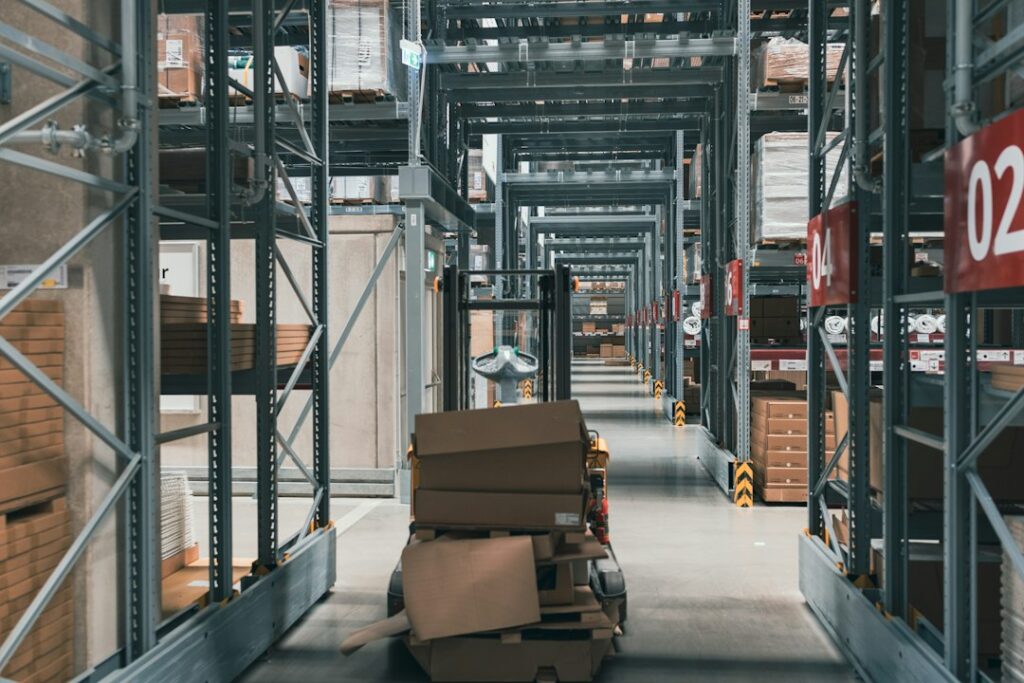

Culinary businesses that have many branches face more complex operational challenges than single restaurants. Starting from maintaining flavor consistency, managing raw material inventory, calculating production costs, to ensuring each branch receives food ingredients as needed.
If all these processes are still carried out using spreadsheets and manual recording, the risk of stock errors, waste of materials, and distribution delays will be even greater.
One solution that can help is to implement central kitchen software, which is a digital system to manage central kitchen activities in an integrated manner. Then, what are the functions, features, and benefits for the F&B business?
What is Central Kitchen Software?
Central kitchen software is software that helps food and beverage businesses manage centralized production processes, ranging from planning raw material procurement needs, food processing, inventory control, to product distribution to various branches.
This system is commonly used by catering businesses, networked restaurants, cloud kitchens, hotels, fast food businesses, and F&B companies that have central production kitchens.
Unlike the cashier application that focuses on sales transactions, the central kitchen software focuses on the process behind providing food. The system can be integrated with ERP, POS, and inventory systems to connect sales, production, stock, and financial data.
Thus, business managers can make decisions based on more accurate operational data.
Baca Juga: PBF Software: Safer And More Efficient Pharmaceutical Distribution
Functions of Central Kitchen Software for Food and Beverage (F&B) Businesses
Here are some of the main functions of central kitchen software that need to be known.
1. Managing Raw Material Inventories
The system helps record the stock of raw materials, receipt of goods, use of production materials, and delivery to branches. Managers can also set minimum stock limits so that production needs are not disturbed.
This function is important for materials that have a limited shelf life, such as meat, vegetables, milk, and frozen products.
2. Controlling Production Costs and Food Costs
Cost control is one of the biggest challenges in the F&B business. Central kitchen software helps calculate ingredient needs based on recipes, production quantities, and purchase prices.
These data support the calculation of the central kitchen food cost, which is the cost of foodstuffs used in the central kitchen production process. With more structured cost data, businesses can evaluate changes in raw material prices, recipe use, and production efficiency without relying solely on estimates.
3. Planning Production
Central kitchen software helps determine the amount of production based on branch demand, sales history, and inventory needs.
This planning can reduce the risk of overproduction and product shortages. As a result, central kitchens can allocate labor, time, and raw materials more effectively.
4. Monitor Distribution to Branches
The system can record the demand for goods from each branch, the number of products shipped, as well as the status of internal order fulfillment.
Managers can compare distribution needs and realizations so that it is easier to identify delays or incompatibilities in the number of goods.
5. Supervise Food Quality and Safety
For businesses that handle perishable products, recording batch numbers, expiration dates, and storage temperatures is critical.
Where available, batch tracking and temperature recording features help businesses trace the origin of materials and identify products that need to be inspected or recalled.
Baca Juga: School Information System: 7 Benefits of More Efficient School Management
Important Features of Central Kitchen Software
Not all central kitchen software has the same capabilities. Before choosing a system, consider the following features:
- Inventory management: monitor the stock of raw materials and finished goods periodically.
- Recipe dan BOM Management: record the recipe as well as the ingredient requirements for each product.
- Production planning: merencanakan volume produksi berdasarkan permintaan.
- Food cost calculation: menghitung biaya bahan dan mengevaluasi biaya produksi.
- Waste tracking: mencatat bahan terbuang, produk rusat, dan penyebab pemborosan.
- Batch dan expiry tracking: melacak nomor batch serta tanggak kedaluwarsa.
- Procurement management: manage the purchase request and receipt of materials.
- Multi-branch distribution: regulating the purchase request and receipt of materials.
- Reporting dan analytics: present reports of stock, production, costs, and waste.
- Integrasi ERP dan POS: linking sales, purchase, inventory and financial data.
The needs of every business are different. Therefore, prioritize features that solve major operational constraints, not just choose the system with the most features.
Benefits of Central Kitchen Software for F&B Businesses
Reduce Raw Material Waste
The kitchen waste tracking feature helps record the amount of wasted materials, causes of damage, and unused products. Such information can be used to evaluate production planning, storage, and procurement.
Maintaining Product Consistency
Standardization of recipes and doses helps ensure that each branch receives a product with the appropriate composition. This is especially important for businesses that want to maintain the quality of taste and customer experience in multiple locations.
Improve Accuracy of Operational Data
Integrated note-taking reduces reliance on manual input across multiple documents. Managers can see inventory, production, and distribution data more consistently, according to system integration and update capabilities.
Supporting Business Growth
As the number of branches increases, the management of the central kitchen requires better coordination. Integrated systems help businesses manage processes in a structured manner without having to increase the complexity of recording excessively.
Food and Beverage (F&B) Business Digitalization Data and Trends
Operational digitalization is increasingly relevant as the use of technology in the food and beverage business grows. However, the success of software implementation is not only determined by the sophistication of features.
Businesses need to have consistent data, standard operating procedures, and measurable performance indicators. Some indicators that can be monitored include the percentage of food cost, the level of wastage of materials, the accuracy of stock, the timeliness of distribution, and the difference between the plan and the realization of production.
Baca Juga: ERP Software: Solutions to Overcome the Complexity of Retail Businesses
When Does an F&B Business Need Central Kitchen Software?
Central kitchen software is worth considering if your business experiences some of the following conditions:
- Has many branches that depend on one central kitchen
- Often have stock gaps between notes and actual conditions
- Difficulty calculating food costs and production costs accurately
- Experiencing waste of raw materials or overproduction
- Difficulty monitoring product distribution to each branch
- Require operational reports that are integrated with finance
If these problems are interrelated, an ERP system with inventory, manufacturing, purchasing, and accounting modules can be an option to integrate operations more thoroughly.
Techway: Integrated System Solutions for Food and Beverage (F&B) Businesses
The selection of central kitchen software should be adjusted to the business scale, production flow, number of branches, and business integration needs.
Techway help businesses evaluate the needs of ERP systems so that inventory management, production, purchasing, and finance can run more integrated. Through a tailored implementation approach, businesses can build a more scalable operational foundation to support long-term growth.
Before determining the system, map out the business processes you want to improve, the data you need to integrate, and the success indicators you want to achieve. Then, consult your ERP system needs, so that your F&B business continues to grow.