Business growth is not only determined by increased sales, but also the company's ability to manage finances, stock taking, production, and customer relationships efficiently. As business processes become more complex, the use of separate systems can trigger recording errors, information delays, and inaccurate decisions.
Di sinilah Enterprise Resource Planning (ERP) berperan. Sistem ERP Mengintegrasikan berbagai fungsi bisnis dalam satu platform sehingga perusahaan dapat mengelola operasional berdasarkan data yang saling terhubung.
ERP trends in 2026 also increasingly lead to artificial intelligence (AI), automation, predictive analytics, and flexible cloud architectures. Gartner, in its 2026 ERP report, highlights how AI is driving ERP to evolve from a record-keeping system to a platform for generating insights and automating business actions.
10 Latest Trends in ERP Systems for Businesses in 2026
Here are 10 ERP system trends that need to be considered so that businesses are better prepared to face competition.
1. AI Integration For Business Process Automation
AI is one of the most significant developments in ERP systems. These technologies help automate repetitive work, analyze data, detect anomalies, and provide recommendations based on operational information.
For example, companies can utilize AI to identify unusual transactions, summarize financial statements, or estimate inventory needs.
According to Gartner, the use of AI embedded in cloud ERP applications has the potential to accelerate the process of closing financial statements by 30% in 2028. This figure is a Gartner prediction, not a result that has been achieved by the entire company.
2. Cloud ERP is Increasingly in Demand
Cloud ERP allows companies to access business data online without having to rely on their own entire server infrastructure. System updates and capacity additions can also be done more flexibly.
This model is relevant for emerging businesses because their operational needs can change as employees, branches, and transaction volumes grow. However, companies still need to consider data security, subscription costs, and reliance on internet connections before choosing a solution.
3. Integrated Accounting System with Operational
Sistem Akuntansi yang terhubung dengan ERP membantu perusahaan memantau arus kas, utang, piutang, biaya operasional, dan profitabilitas dalam satu lingkungan kerja.
This integration reduces the need to enter data repeatedly into different applications. Sales, purchase, and stock taking transactions can also be connected to financial records according to the system configuration.
For companies looking to grow, the integration helps generate more consistent reports and accelerate financial decision-making.
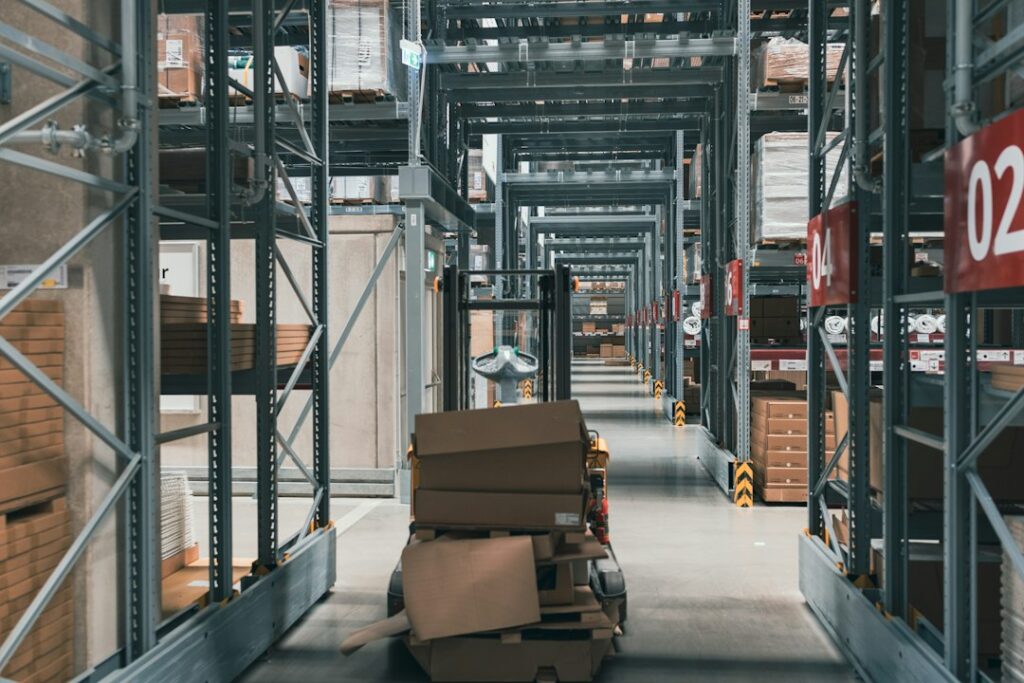
4. WMS CSO System for Order and Warehouse Management
Businesses that sell products through multiple channels require coordinated order management and stock taking.
The Order Management System (OMS) helps manage orders from various channels, while the Warehouse Management System (WMS) supports the management of goods activities, from the receipt of goods to the collection and delivery of orders.
Integrasi sistem OMS WMS dengan ERP membantu perusahaan menyelaraskan data penjualan, stok, pengadaan, dan pemenuhan pesanan. Dampaknya, risiko kelebihan penjualan akibat stok tidak akurat dapat ditekan dan proses distribusi lebih mudah dipantau.
5. Predictive Analytics for Business Planning
Modern ERPs not only present reports on previous events, but also increasingly support analysis to forecast the next condition.
Companies can use historical data to estimate demand, raw material requirements, cash flow, and production capacity. The results of the analysis help management prepare various scenarios before making a decision.
6. Modular and Flexible ERP
Perusahaan tidak selalu membutuhkan seluruh modul ERP sejak awal. Karena itu, Techway.id memberikan layanan yang relevan dengan pendekatan sistem modular semakin relevan, yaitu memilih fitur sesuai kebutuhan dan menambahkan modul ketika bisnis berkembang.
The company can start from finance, then expand the system to purchasing, stock taking, manufacturing, to customer management.
The modular architecture also makes it easier to adapt the system to changes in business processes. However, intermodule compatibility and integration costs still need to be evaluated.
7. ERP System for Smarter Manufacturing
The manufacturing industry requires visibility into raw materials, production schedules, costs, machine capacity, and product quality. An ERP designed for manufacturing helps connect the entire process.
In a 2026 manufacturing technology survey involving 520 professionals, Rootstock reported that 94% of respondents from manufacturing companies had used AI in some form. The survey also found that 61% of respondents plan to increase the company's software spending in the next 12 months. These results describe the survey respondents, not the entire global manufacturing industry.
For companies seeking Odoo Manufacturing Indonesia, it is important to ensure implementation includes production planning, bill of materials (BoM), quality control, and integration with inventory and accounting modules according to factory needs.
8. ERP Integration with Loyalty Platform System
Customer relationships are an important part of business growth. Therefore, ERP integration with the Loyalty Platform System can help companies connect transaction data with customer loyalty programs.
For example, return data can be used to calculate points, identify customers with repeat transactions, and evaluate the effectiveness of promotional programs.
Ketika terhubung dengan sistem penjualan dan CRM, perusahaan dapat memahami pola belanja pelanggan secara lebih menyeluruh. Strategi retention pun dapat dikembangkan berdasarkan data aktual, bukan sekadar asumsi.
9. Data Security and AI Governance
The more business processes are connected in ERP, the more important it is to protect company data. Modern systems need to support setting permissions, logging user activities, backing up data, and restoring mechanisms in the event of an outage.
If the ERP uses AI, the company also needs to ensure that the resulting recommendations can be checked and not disclose sensitive information to unauthorized money parties.
10. ERP Integration with Digital Business Ecosystem
ERP increasingly acts as a hub for the integration of various business applications. The system can be connected to e-commerce platforms, CRM, payments, logistics, and analytics tools via APIS or available connectors.
The integration reduces the barriers to data exchange between departments while helping companies obtain a more complete operational picture.
For omnichannel businesses, for example, ERP integration with sales channels allows companies to align orders, stock, and transaction recording. As a result, business management becomes more structured as the number of channels and transaction volume increases.
Tips for Choosing the Right ERP System
Tidak semua bisnis membutuhkan fitur ERP yang sama. Sebelum menentukan solusi, sebaiknya anda konsultasikan dulu, dan tentukan solusi yang tepat. Perusahaan sebaiknya mengevaluasi beberapa hal berikut:
- Operational needs: Identify the processes that are most frequently impacted, such as accounting, warehousing, or production.
- Kemampuan integrasi: Pastikan ERP dapat terhubung dengan aplikasi yang sudah digunakan.
- Scalability: Choose a system that is able to keep up with the growth of transactions, users, and branches.
- Total cost: Calculate the cost of implementation, training, maintenance, and integration.
- Team readiness: Ensure employees are trained and understand workflow changes.
Companies also need to set success indicators from the beginning, such as order processing time, stock taking accuracy, duration of financial statement closure, and operational costs.
FAQs About ERP Systems
What are the biggest ERP trends in 2026?
The biggest trend is the integration of AI into ERP workflows and the move to cloud architecture. Both changed the role of ERP from a record-keeping system to an analytics and automation platform.
Is cloud ERP secure for enterprise data?
Cloud ERP will be secure if providers implement data encryption, tiered access controls, audit trails, and tested backup and restore procedures. The company remains responsible for its internal data governance policies.
Do small and medium businesses need ERP?
MSMEs can start from core modules such as finance and stock taking, then gradually add other modules through a modular approach. This incremental approach is commonly chosen because it reduces the initial cost of implementation and allows system adjustment as transaction volume grows.
What is the difference between CSO and WMS?
CSOs regulate the order cycle from receipt to completion, while WMS regulates the physical movement of goods in the warehouse. They complement each other when connected to ERP.
How does AI change financial statements?
AI can summarize data, detect transaction anomalies, and speed up reconciliation so that financial teams are more focused on analysis and decision making.
Any indicators of a successful ERP implementation?
Common indicators include the speed of closing financial statements, stock accuracy, order processing time, and a decrease in administrative operating costs.
Ingin memahami fondasi ERP sebelum mengikuti tren teknologinya? Baca ERP application guide yang membahas cara kerja, fitur, biaya, dan tahapan implementasinya.
Conclusion
The trend of ERP systems in 2026 shows a shift from just recording transactions to integrated, automated, and data-driven business management. AI, cloud ERP, predictive analytics, and system integration are important elements for companies that want to grow sustainably.
From Accounting Systems and WMS OMS Systems to Loyalty Platform Systems and manufacturing solutions such as Odoo, technology selection should be tailored to the needs and targets of the business.
ERP yang tepat bukan hanya membantu perusahaan bekerja lebih efisien, tetapi juga menyediakan fondasi data dan proses yang dibutuhkan untuk mengambil keputusan lebih baik dan mengembangkan bisnis secara berkelanjutan.